Mainboard
Mainboard
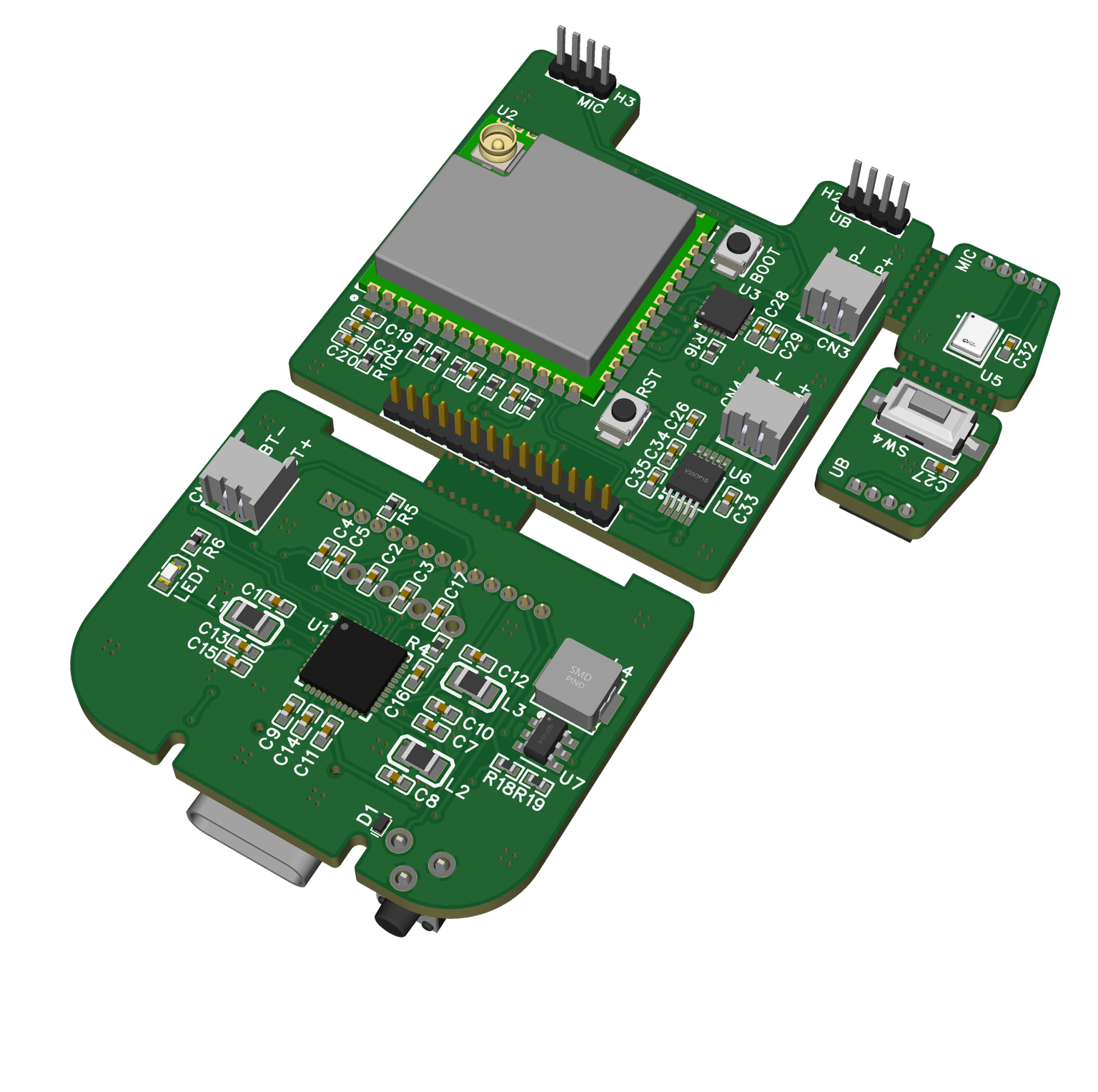
The Keero mainboard is the core hardware unit of the platform. It carries the compute, interaction, power, and module responsibilities that make the rest of the system possible.
What The Mainboard Is Meant To Do
At product level, the mainboard acts as:
- the processing core of the device
- the connection point for sensors and interaction hardware
- the power-management backbone
- the interface layer for modular accessories
This is what allows Keero to behave like one coherent platform instead of a collection of disconnected experiments.
Why The Board Matters
From a system point of view, the mainboard is where the project stops being only an idea and starts becoming a reusable hardware base.
It is the place where:
- compute meets interaction hardware
- portable power becomes a real product concern
- external modules connect back into one shared architecture
- firmware can target one stable core instead of multiple ad-hoc boards
Main Functional Areas
Compute
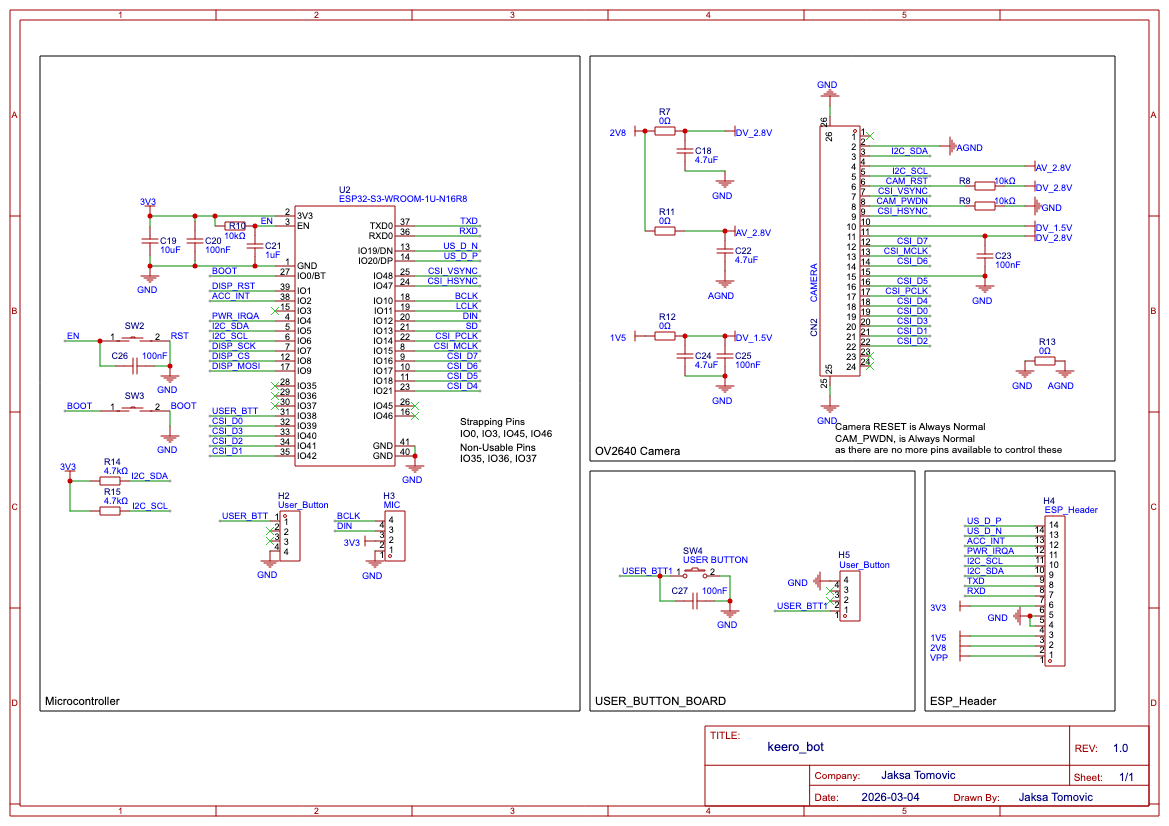
The board is built around ESP32-S3-WROOM-1U-N16R8, giving the project a practical balance between embedded performance, connectivity, and firmware flexibility.
This makes the platform suitable for sensor-rich embedded interaction without pushing it into an unrealistic hardware scope.
Sensing and Interaction
The mainboard supports a multi-modal interaction direction that includes:
- camera connector path
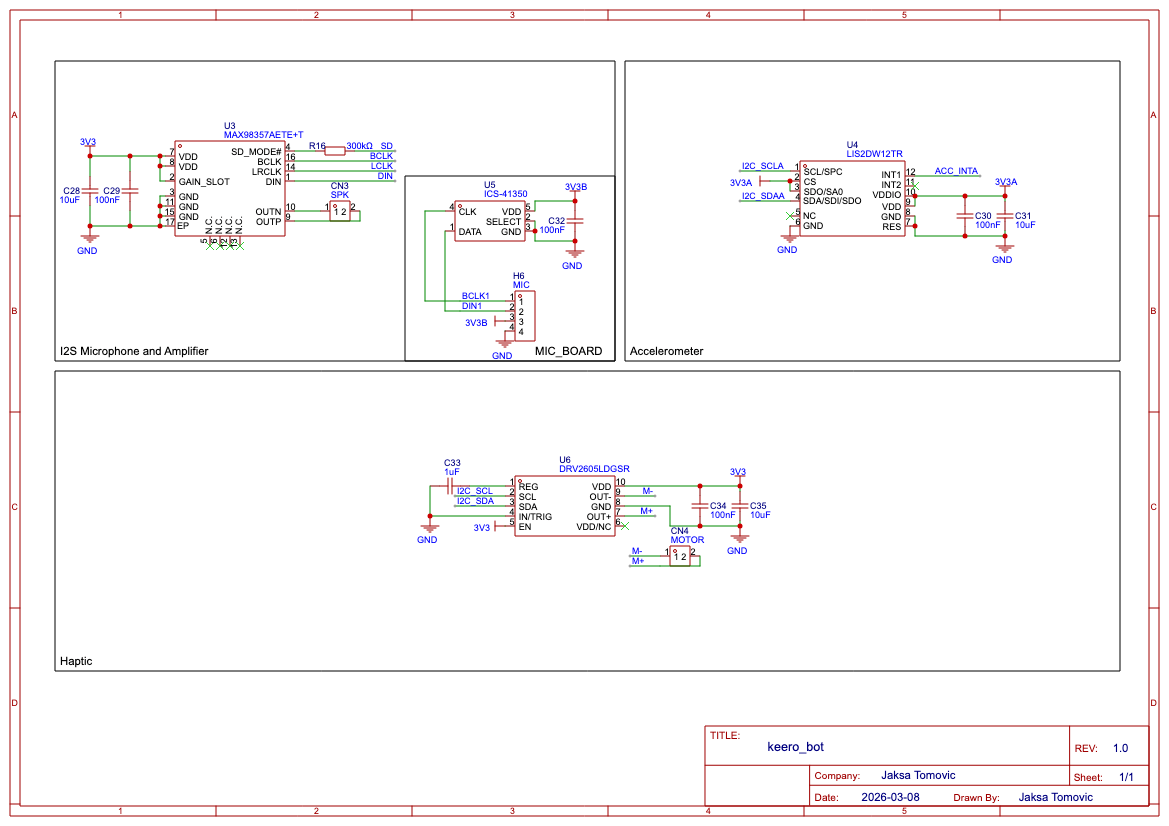
- audio input and output
- haptic feedback
- motion sensing
- local display support
This is one of the strongest parts of the platform because it moves Keero closer to a real device architecture instead of staying a bare controller board.
Power
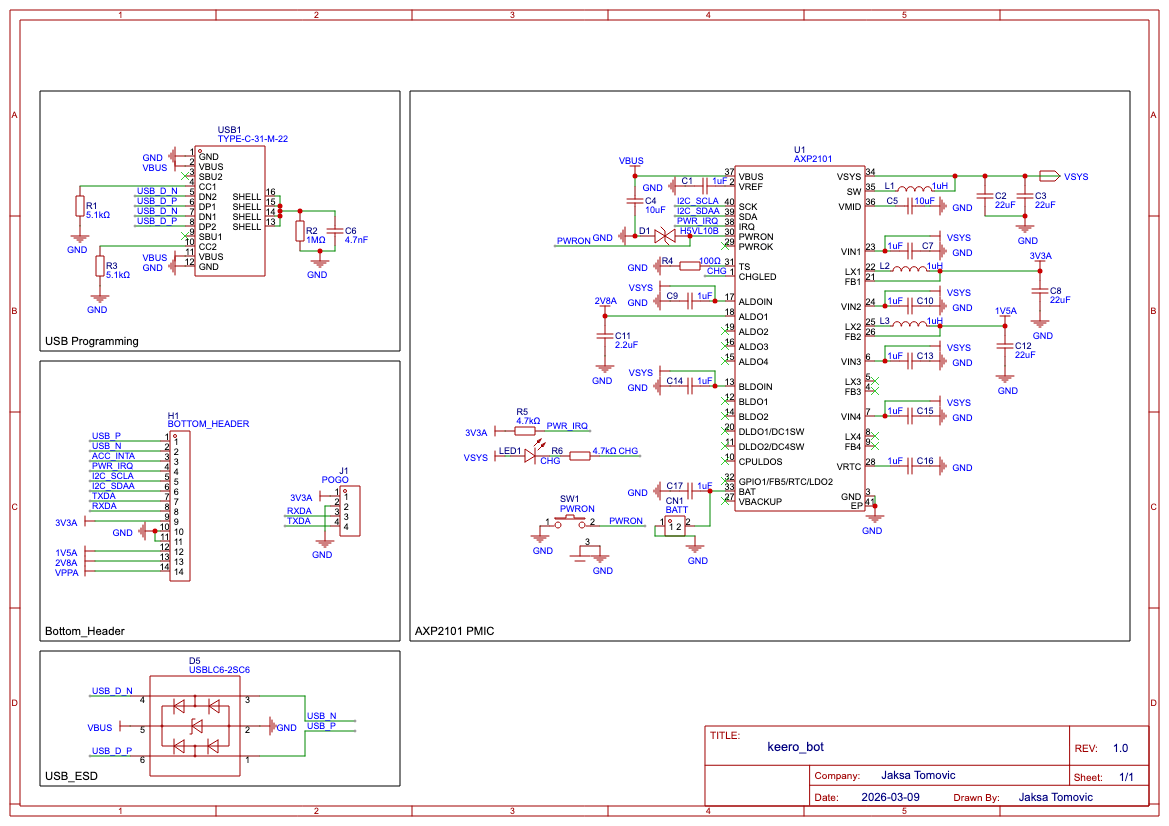
The board includes a battery-oriented power-management approach designed for portable use and docking scenarios. Public documentation keeps this section conceptual rather than implementation-specific.
That is enough to communicate product intent while protecting lower-level production detail.
Expansion
The board exposes modular interfaces so the same core platform can support additional hardware such as docks, mobility systems, and future expansion concepts.
In other words, the mainboard is not only the current board. It is the base for the broader Keero hardware family.
Design Philosophy
The mainboard was not designed as a generic breakout board. It was designed as a compact product-oriented core with enough integration to feel serious, while still leaving room for rapid iteration through attached modules.
That balance matters for:
- firmware experimentation
- industrial design iteration
- module prototyping
- future enclosure work
Publicly Visible Hardware Scope
The current public release communicates that the mainboard already integrates:
- compute
- camera path
- display path
- audio path
- haptic support
- motion sensing
- development and module access
That is enough detail for high-level technical evaluation without exposing the project as a replication package.
Reference Audio Output Part
For the current public hardware story, the mainboard speaker reference used for audio output is:
- speaker reference: AliExpress reference link
This is documented as a practical reference part for the current prototype direction, not as a frozen production sourcing list.
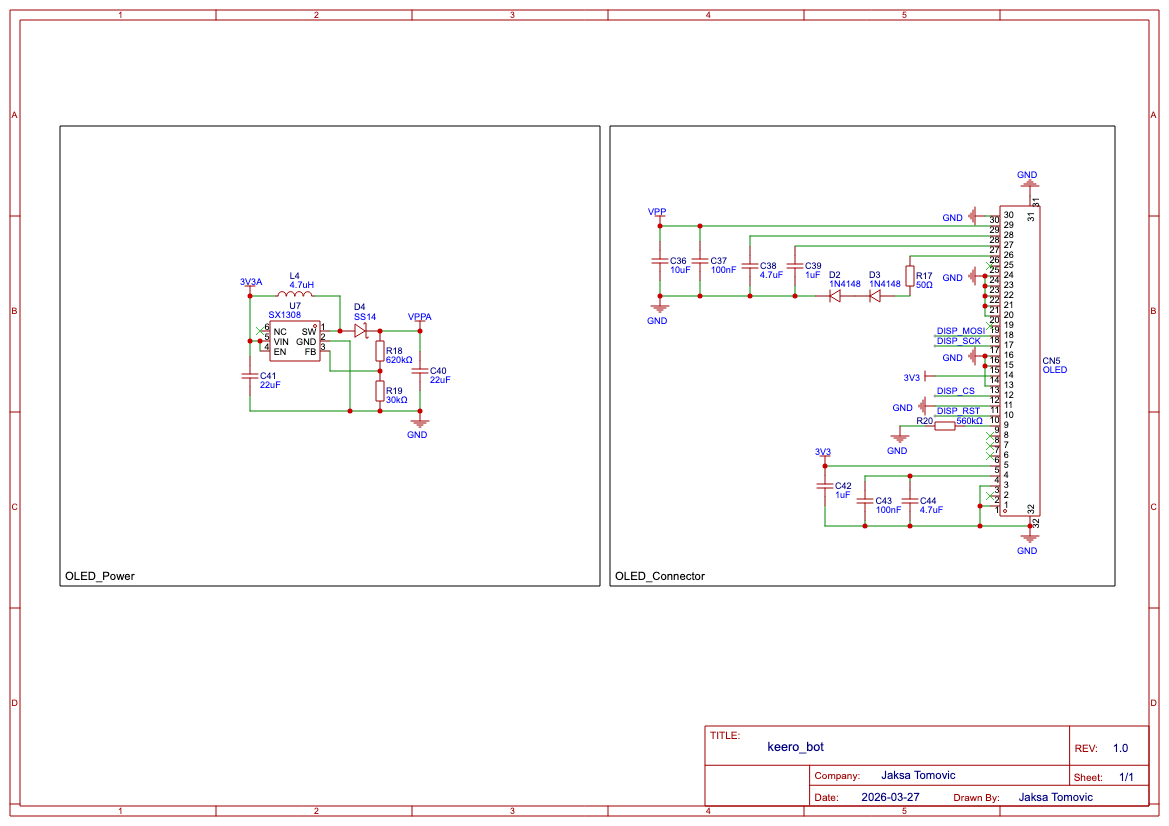
Schematic Previews
The following previews are included as visual architecture references, not as a production release substitute.
The public documentation also includes a schematic PDF for technical review:
The PDF is presented as part of the high-level documentation package, while the broader production release stays controlled.
Public Access Note
This page intentionally stays at subsystem level. Production sources, editable layouts, and manufacturing-specific files are not part of the public documentation release.
Board Render